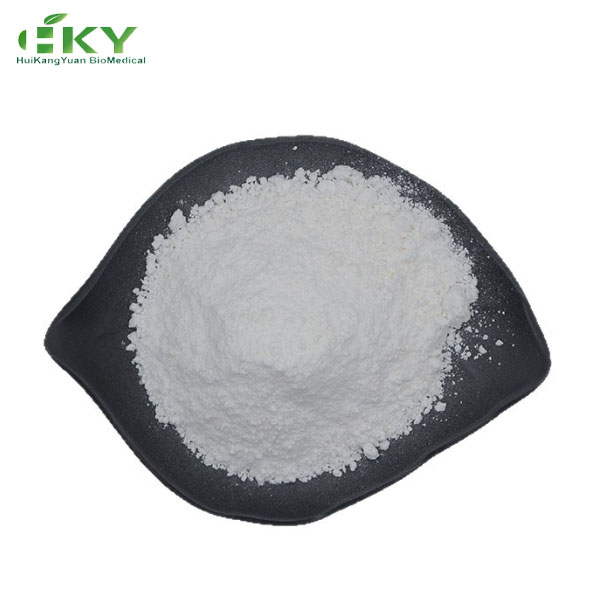
Phosphatidylserine-CAS 51446-62-9
Product Name: Phosphatidylserine
Common Abbreviation: PS
INCI Name: PHOSPHATIDYLSERINE
CAS Number: 51446-62-9 (general / soybean-derived)
Alternative CAS: 84776-79-4 (sunflower lecithin-derived PS)
EINECS Number: 257-207-0
Particle Size: 80-200 mesh (fine powder)
Bulk Density: 0.3-0.6 g/cm³
pH Value (1% dispersion): 5.0 - 7.5
Acid Value: 15-35 mg KOH/g (varies by grade)
Peroxide Value: ≤5.0 meq/kg (fresh product)
Iodine Value: 80-120 g I₂/100g (unsaturated fatty acids present)
Saponification Value: 150-200 mg KOH/g
Heavy Metals: ≤10 ppm
Arsenic: ≤2 ppm
Moisture Content: ≤3.0%
Loss on Drying: ≤5.0%
Storage Conditions: Cool, dry place, sealed containers, protect from light and air, refrigeration recommended (2-8°C) for long-term storage
Shelf Life: 12-24 months from manufacturing date under proper storage; shorter than many ingredients due to oxidation sensitivity
Phosphatidylserine-CAS 51446-62-9
Phosphatidylserine, commonly known as PS, is a bioactive phospholipid naturally present in human cell membranes, including skin cells. Derived from soybean or sunflower lecithin through enzymatic conversion, PS is celebrated for its remarkable skin barrier repair, anti-aging, and anti-inflammatory properties.
As a key component of the stratum corneum lipid matrix, PS helps replenish declining phospholipid levels that occur with age and environmental damage. It supports ceramide production, enhances skin hydration, stimulates collagen synthesis, and calms inflammation — making it a versatile active for barrier repair, anti-aging, soothing, and sensitive skin formulations. Bioidentical to skin's own phospholipids, PS is exceptionally well-tolerated and suitable for all skin types.
Key Benefits
✅ Boosts ceramide production - strengthens lipid barrier
✅ Deep moisturization - 25-30% hydration increase with 2% use
✅ Anti-aging / anti-wrinkle - stimulates collagen production
✅ Improves skin elasticity - firmer, more supple skin
✅ Anti-inflammatory - calms redness and irritation
✅ Soothes sensitive skin - reduces reactivity and discomfort
✅ Reduces retinol / AHA irritation - erythema from 30% to 10%
Applications
Anti-Aging & Anti-Wrinkle Products (30% of cosmetic usage):
• Anti-aging serums: 1-5% - collagen stimulation + barrier repair
• Wrinkle creams: 1-3% - reduces fine lines, improves elasticity
• Firming creams: 1-4% - enhances skin firmness and density
• Neck / décolletage creams: 1-3% - anti-aging + barrier support
• Night creams: 1-5% - intensive overnight repair + regeneration
• Collagen-boosting products: 1-4% - stimulates dermal collagen
• Peptide serums: 1-3% - synergistic anti-aging with peptides
Barrier Repair & Sensitive Skin (25%):
• Barrier repair creams: 1-3% - phospholipid replenishment
• Sensitive skin moisturizers: 0.5-2% - gentle repair + soothing
• Redness / rosacea care: 1-3% - anti-inflammatory + calming
• Post-procedure care: 2-5% - accelerates skin recovery
• Baby / extremely gentle products: 0.5-1% - ultra-mild repair
• Microbiome-friendly skincare: 1-3% - supports healthy barrier
• "Skin barrier" positioning products: 1-5% - flagship barrier ingredient
Soothing & Anti-Inflammatory Products (15%):
• After-sun gels / lotions: 0.5-2% - calms UV-induced inflammation
• Post-acne treatment: 1-3% - soothes + reduces post-inflammatory redness
• Calming toners / essences: 0.5-2% - gentle soothing hydration
• Irritated skin treatments: 1-4% - reduces redness and discomfort
• Retinol / AHA companion products: 1-3% - mitigates irritation from actives
• Itchy / reactive skin: 1-3% - calms reactivity
Moisturizers & Hydration Products (12%):
• Facial moisturizers: 0.5-3% - hydration + conditioning
• Body lotions / creams: 0.5-2% - all-over moisturizing + barrier support
• Hand creams: 1-3% - repair for frequently washed hands
• Hydrating serums: 1-3% - phospholipid-based hydration
• Sleeping masks: 1-3% - overnight moisture barrier repair
• Essences / toners: 0.5-2% - light hydration + prep
Certificate Of Analysis (COA)
Test Item | Specification | Test Result | Test Method |
Product Identification | |||
Product Name | Phosphatidylserine | Phosphatidylserine (PS) | —— |
INCI Name | PHOSPHATIDYLSERINE | PHOSPHATIDYLSERINE | —— |
CAS Number | 51446-62-9 | 51446-62-9 | —— |
EINECS Number | 257-207-0 | 257-207-0 | —— |
Chinese Name | 磷脂酰丝氨酸 | 磷脂酰丝氨酸 | —— |
Chemical Name | L-3-Phosphatidyl-L-serine | L-3 - 磷脂酰 - L - 丝氨酸 | —— |
Grade | Cosmetic Grade (50%) | Premium Cosmetic Grade 50% PS | —— |
Source | Soybean lecithin derived | Non-GMO soybean lecithin | —— |
Form | Powder | Fine powder | —— |
Organoleptic Properties | |||
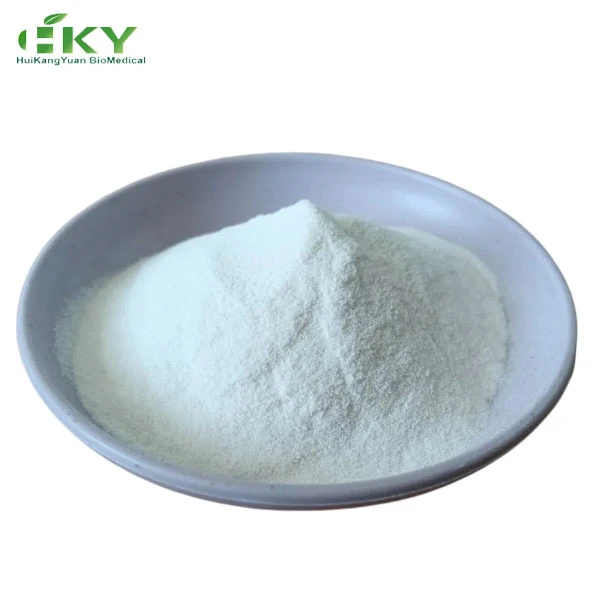
Appearance | Light yellow to yellow powder | Light yellow fine powder | Visual |
Odor | Characteristic mild phospholipid | Mild characteristic, acceptable | Olfactory |
Color | Light yellow to yellow | Light yellow | Visual |
Physical Properties | |||
Particle Size (through 80 mesh) | ≥95% | 98% | Sieve analysis |
Bulk Density | 0.3 - 0.6 g/cm³ | 0.45 g/cm³ | Gravimetric |
Moisture Content | ≤3.0% | 1.8% | Karl Fischer |
Loss on Drying | ≤5.0% | 2.5% | Gravimetric (105°C, 2h) |
pH (1% dispersion) | 5.0 - 7.5 | 6.2 | pH meter |
Chemical Properties | |||
Phosphatidylserine (PS) content | ≥50.0% | 52.3% | HPLC |
Phosphatidylcholine (PC) | 15 - 30% | 22.1% | HPLC |
Phosphatidylethanolamine (PE) | 5 - 15% | 8.7% | HPLC |
Phosphatidic acid (PA) | 2 - 10% | 4.5% | HPLC |
Other phospholipids | ≤8% | 3.2% | HPLC |
Neutral lipids / triglycerides | Balance | 9.2% | Calculation |
Acid Value | 15 - 35 mg KOH/g | 22.4 mg KOH/g | Titration |
Peroxide Value | ≤5.0 meq/kg | 1.8 meq/kg | Iodometric |
Iodine Value | 80 - 120 g I₂/100g | 98 g I₂/100g | Wijs method |
Saponification Value | 150 - 200 mg KOH/g | 172 mg KOH/g | Titration |
Total Phosphorus | 2.5 - 4.0% | 3.2% | Spectrophotometric |
Fatty Acid Composition | |||
Palmitic acid (C16:0) | 8 - 16% | 12.5% | GC |
Stearic acid (C18:0) | 3 - 8% | 5.2% | GC |
Oleic acid (C18:1) | 12 - 25% | 18.7% | GC |
Linoleic acid (C18:2) | 50 - 65% | 56.8% | GC |
Linolenic acid (C18:3) | 3 - 8% | 5.1% | GC |
Other fatty acids | ≤5% | 1.7% | GC |
Heavy Metals & Contaminants | |||
Heavy Metals (as Pb) | ≤10 ppm | <3 ppm | ICP-MS |
Arsenic (As) | ≤2 ppm | <0.5 ppm | ICP-MS |
Lead (Pb) | ≤1 ppm | <0.3 ppm | ICP-MS |
Mercury (Hg) | ≤1 ppm | <0.1 ppm | ICP-MS |
Cadmium (Cd) | ≤1 ppm | <0.1 ppm | ICP-MS |
Solubility Test | |||
Water dispersion | Milky white dispersion | Milky white, uniform | Visual |
Chloroform solubility | Clear solution | Clear, fully soluble | Visual |
Microbiological | |||
Total Aerobic Count | ≤1000 CFU/g | <100 CFU/g | Plate Count |
Yeast & Mold | ≤100 CFU/g | <10 CFU/g | Plate Count |
E. coli | Negative | Negative | —— |
Salmonella | Negative | Negative | —— |
Staphylococcus aureus | Negative | Negative | —— |
Pseudomonas aeruginosa | Negative | Negative | —— |
Candida albicans | Negative | Negative | —— |
Allergen & GMO | |||
Soy protein 残留 | ≤10 ppm | <2 ppm | ELISA |
GMO status | Non-GMO | Non-GMO verified | PCR |
Regulatory Compliance | |||
China IECIC | Compliant | Pass | —— |
EU CosIng | Compliant | Pass | —— |
Heavy metals (cosmetic) | Meet limits | All pass | —— |
Final Conclusion | —— | PASSED - MEETS 50% COSMETIC GRADE REQUIREMENTS | —— |
Contact Us
💌 Contact us today for technical data, formulation guidance, and competitive pricing! E-mail:
You Might Also Like
1.ur Products A full range of high-quality cosmetic raw materials, including plant extracts, natural active ingredients, skin care actives and formulation additives. Stable supply & strict quality control.